

COURSE OVERVIEW
Play a vital role in designing and building worlds for the screen.
This course develops your individual creativity and teaches you the technical expertise essential for a career in film and television. You will develop your skills and gain experience on live action films, animation, television, games and commercials, using traditional and digital design techniques.
Content Tabs
You’ll learn in a fully equipped design studio, where you’ll be designing for live action shoots, using traditional and digital design techniques. Uniquely in the UK, you’ll benefit from studying alongside students of other filmmaking disciplines, engaging in a series of productions where working methods replicate professional practice.
You’ll also get far more time learning directly from professional tutors, in real production facilities and on real projects, than you would get in the vast majority of film schools or universities.
COURSE FACILITIES
Our design studios offer you a designated workstation equipped with a drawing board, computer, model making table and storage. Computers are loaded with the latest design software. There are two plotters and two 3D printers in the department. To assist you on productions, the School also has its own well stocked Prop Store and maintains close relationships with a wide range of external prop houses to help facilitate the diverse nature of student productions. We also have a selection of drapes and green screens available for productions.
Evolving digital technology has brought in new design tools and ways of working and this course promotes a lively interface between old and new methods. 3D and 2D computer techniques and Concept Art are taught alongside traditional skills such as set sketching, orthographic draughting, design geometry and model making.
The course offers you the opportunity to specialise in Concept Art, particularly in the second year. You’ll get to apply your skills to live action and animation films, television programmes, games and commercials, in the studio and on location, using built sets, green screen and cutting-edge Virtual Production technology. Relevant business and management skills are also taught, equipping you to manage a small art department, its budget, personnel and logistical schedules, studio procedures and set decorating. Studio visits and placements will familiarise you with a working art department and inspire you with actual film sets.
Production Design students come from a wide variety of visual backgrounds, including theatre, architecture, illustration, fine art, digital design, interior design and 3D design. When you apply, your portfolio submission must demonstrate a strong visual imagination, an aptitude for spatial and 3D design, an awareness of architecture and design for the moving image and exhibit a personal visual language. Please refer to our guidance notes here for more information.
Experience of film/TV work is not essential but a willingness to work collaboratively and an ability to motivate and lead a team are essential.
While many applicants will have a degree from a British or overseas university, we will consider applicants who do not have a degree if they have an impressive portfolio, a creative track record or an alternative qualification.
International students Visa and English language requirements
If you have any questions, please email info@nfts.co.uk
The following items should accompany your online application:
- A comprehensive portfolio of work which demonstrates an aptitude for spatial and 3D design, awareness of architecture, design for the moving image and a personal visual language. Please submit a hard copy portfolio, which can be A4, A3, A2 or A1. If you have any further questions regarding the work you need to submit, please contact our Registry department.
- CAD work – printouts (optional extra submission)
Your portfolio should be posted to NFTS Beaconsfield, for the attention of the Registry Department. Due to the time it may take you to prepare it, we advise you to start to prepare it in good time, and post it so that it arrives by the course deadline date. Please do not send original copies of work. Portfolios will be confidentially disposed of after the admissions process.
Successful applicants will be required to attend an in-person selection workshop and interview. This years workshop is scheduled week commencing 8 September 2025. There is no charge for the workshop.
Applications will close at 23:59 on the day of the deadline, shown at the top of this page.
Funding Available
The NFTS offers more scholarships and bursaries to British students, relative to its size, than almost any UK educational institution. If you successfully gain a place on a course, you’ll receive details on how to apply. Funding is available to UK citizens and British passport holders; we recommend international, EU, and EEA students to take a look at our funding guide for helpful advice and resources.
Upcoming Events

Tutors

Student Showcase
Cloud 99 (trailer)
2026 graduate fiction film
Director/Writer - Leila Murton Poole
Producer - Milly Pope
Production Designer - Robbin Younger
In a world where sunlight is taxed, a struggling father uses more light than his family can afford to give his daughter a chance in her school’s sunflower-growing competition.
Eyeliner (trailer)
2026 graduate animation
Director/Animator - Aisha Boudjillouli
Producer - Densu Moseti
Production Designer - Chell Young
When Nina and her best friend Lily decide to steal an eyeliner, they hope that this will be their key to womanhood. When they’re given wildly different receptions to wearing it, Nina discovers that her journey as a trans girl might not be so easy.
Dive (trailer)
2023 graduate fiction film
Director/Writer - Will Peppercorn
Producer - Martina Buendia Silva
Production Designer - Darya Naumchenko
An environmental thriller set onboard an offshore oil rig out in the North Sea.
Curiosa (trailer)
2022 graduate animation
Director - Tessa Moult-Milewska
Producer - Sychelle-Kristina Yanda
Production Designer - Sehar Kidwai
Curiosa tells the story of Mary who visits her boyfriend's flat for the first time, just to discover it’s been stripped bare of all personal belongings. After being denied an explanation, she climbs into his head.
Requiem (trailer)
2021 graduate fiction film
Director - Emma J. Gilbertson
Producer - Michelle Brøndum
Production Designer - Freddie Burrows
Requiem is set in 1605, against the backdrop of the witch trials. It follows Evelyn as she engages in a game of cat and mouse against her father, Minister Gilbert, in order to be with Mary, the woman she loves.
Student Work
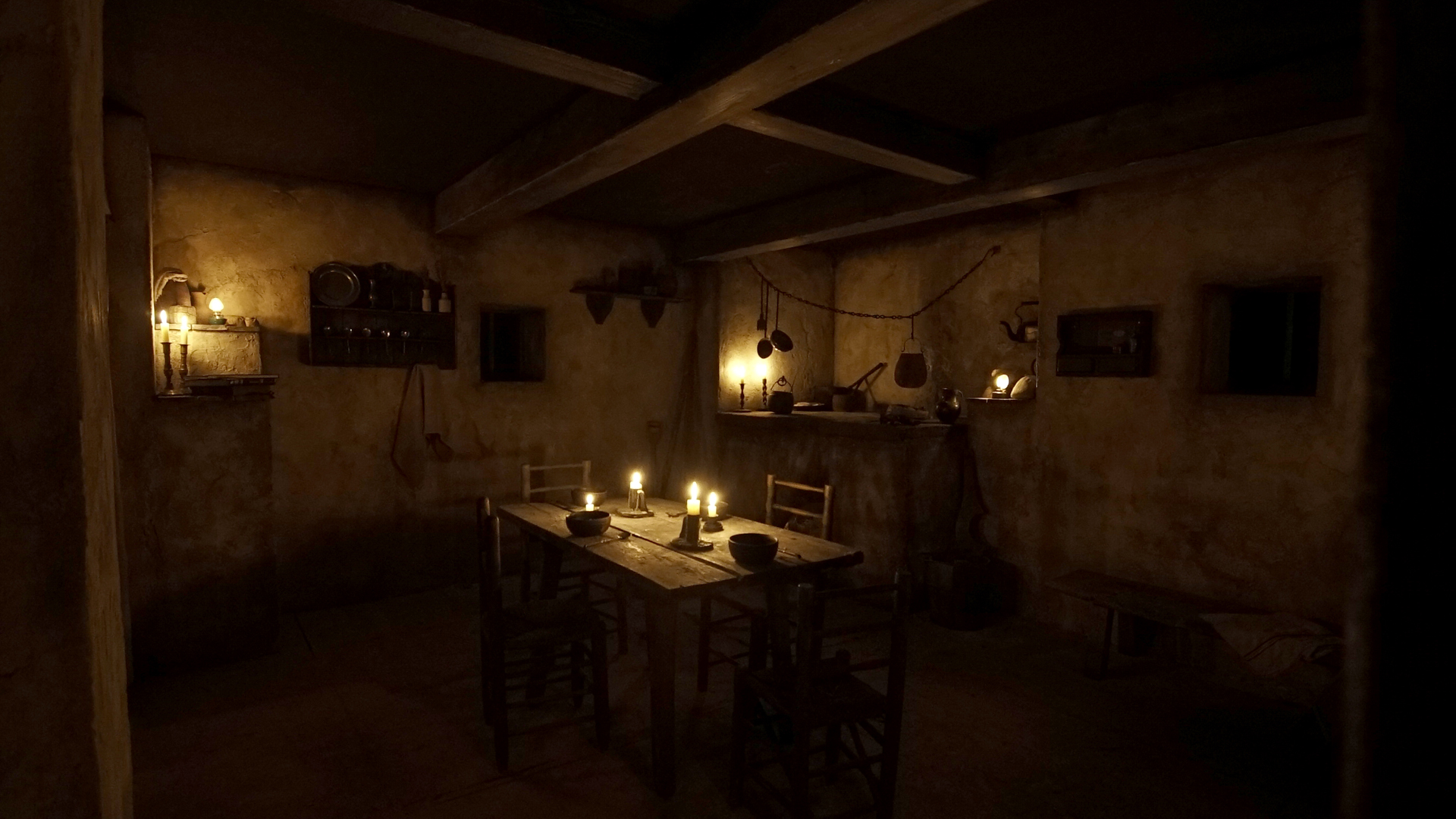
Still from the set of a 17th century schetl built on Stage 1 for a fiction graduation film.
Designed by Dan Miskimmon.
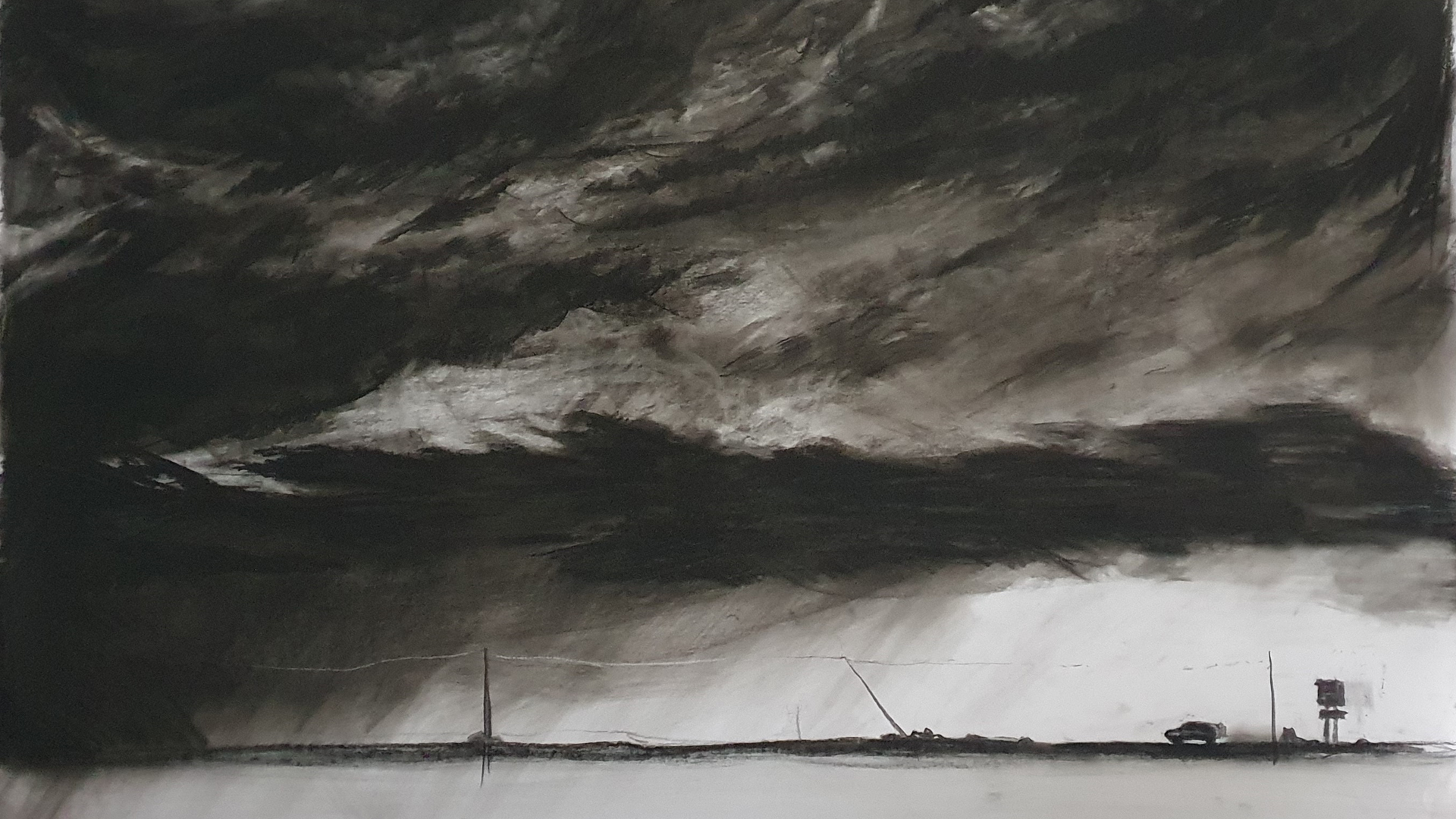
Concept art for first year film Sticky Stuff.
Created by Matthieu Levy.
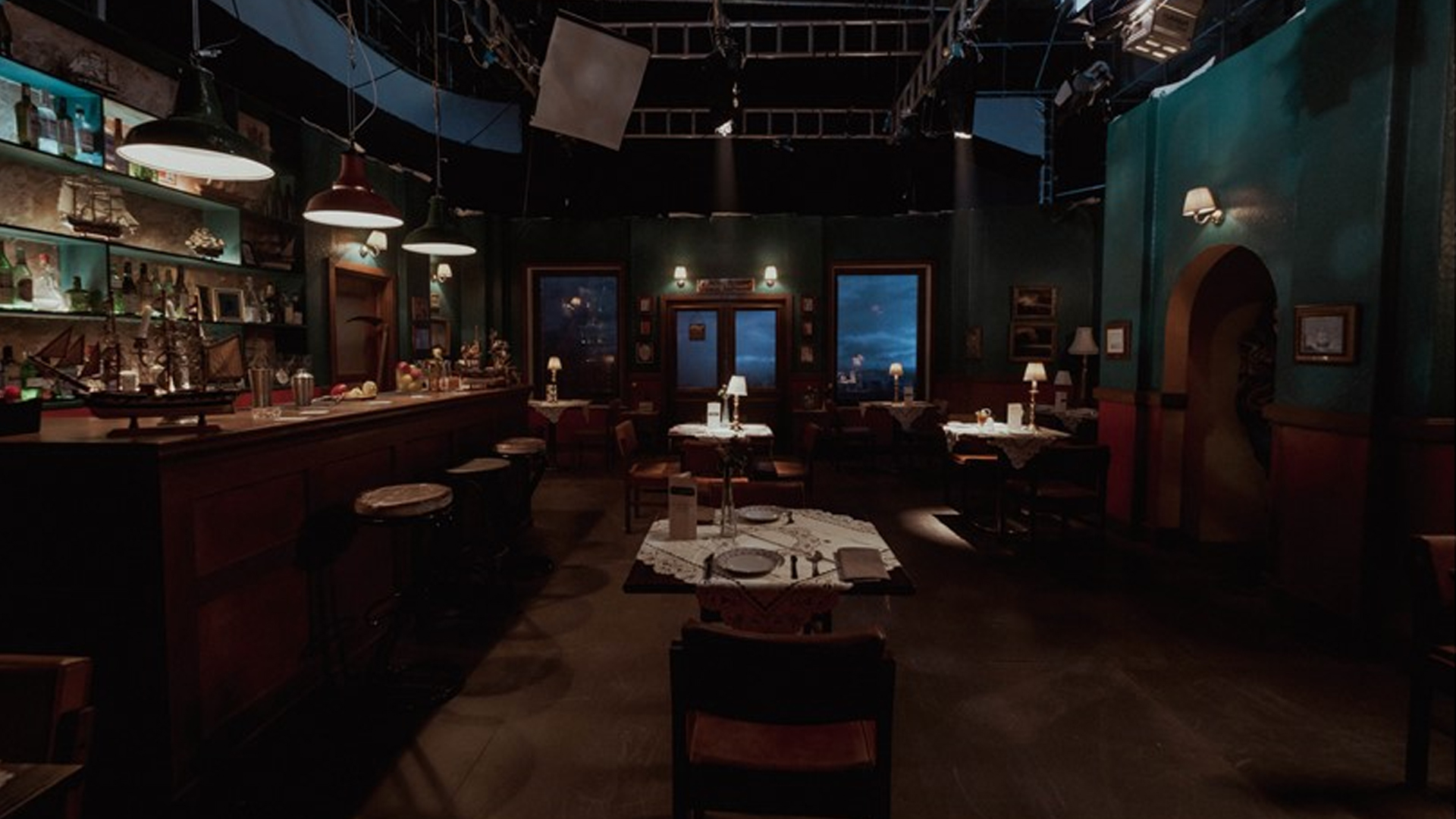
Still from set of café for Date with Death – First Year Film built on Stage 1.
Designed by Melissa Davis.

Set build for Graduation TV show Bongo's Big Adventure on Stage 2.
Designed by Matthieu Levy.

Model of fantasy project The Book of Dead Days
Created by Dan Miskimmon.
