

NFTS Graduate Juliette Martineau On Chasing Wild Dogs On David Attenborough’s Kingdom And Life After The NFTS

Storytelling is at the heart of every course at the National Film and Television School. Working with students across disciplines to craft compelling stories that call attention to the natural world takes collaboration, communication and genuine passion. These are skills that Directing and Producing Science and Natural History graduate Juliette Martineau has carried with her since leaving the NFTS and entering the industry.
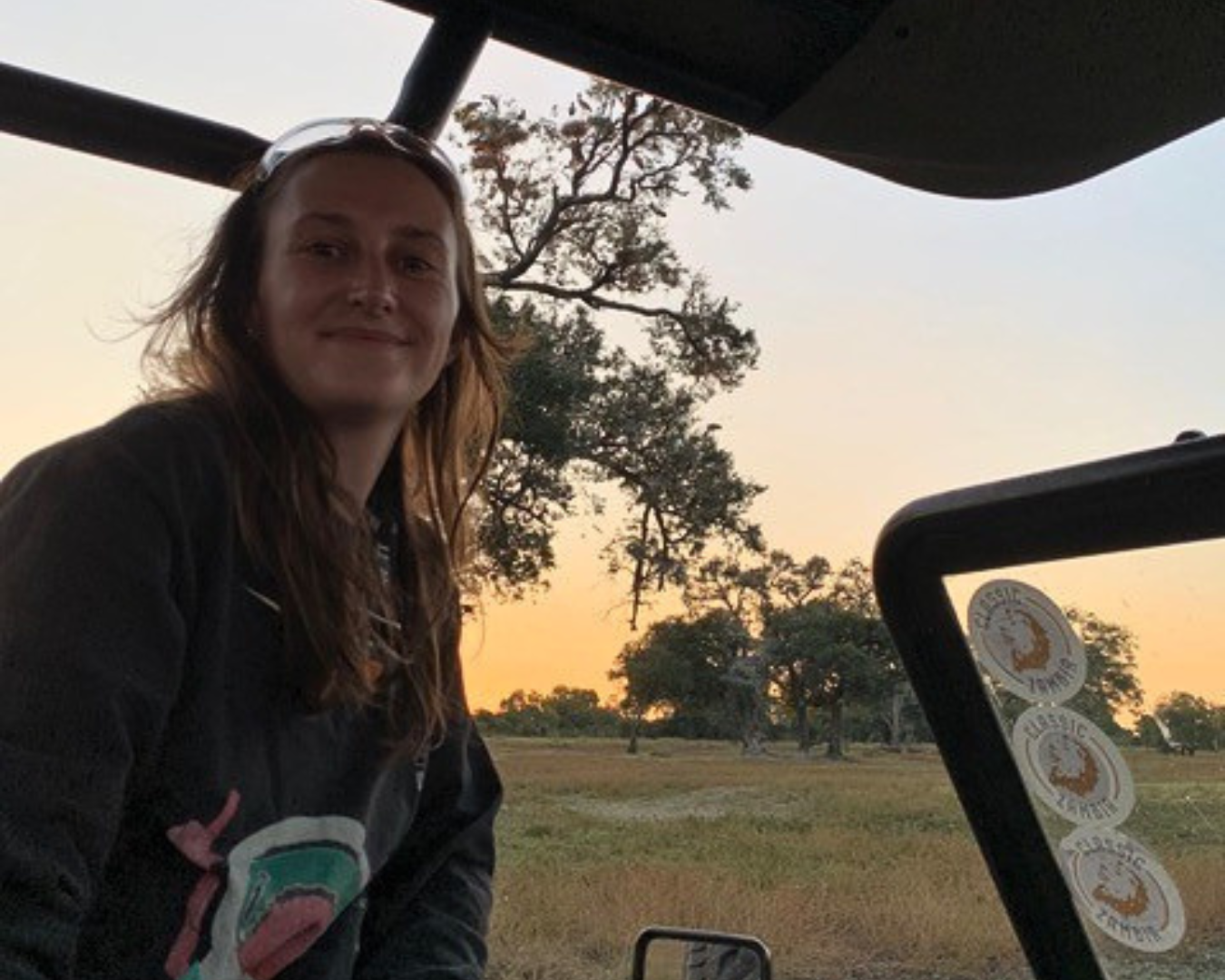
Juliette Martineau
Since she graduated 6 years ago, Juliette Martineau’s impressive career has taken her across the globe as an assistant producer for BBC Studios, with credits including Green Planet, Our Planet II and most recently, David Attenborough’s Kingdom: A thrilling six-part documentary filmed over five years, charting the lives of lions, leopards, wild dogs, and hyenas living in South Luangwa National Park in Zambia. We caught up with Juliette to hear about how she’s been getting on, and to find out how her time at the NFTS helped kickstart her career in blue chip production.
What were you doing before you applied to the NFTS and why did you decide to apply?
I applied to NFTS a few months after finishing my undergraduate degree in Evolutionary Biology, focusing on genetics. Throughout my bachelor’s degree, I wanted to work in academic research and did various independent research projects in different labs, which were great, but ultimately, I realised that my favourite part about all of it was telling anyone and everyone who would listen about the science, reading other scientist’s research and turning it into stories myself and other people could understand to help make sense of the world around us. So I thought I should go into science communication. I had also always had a curiosity about filmmaking and loved cinema, but it never felt like something I could be good at, or do for a job. When researching science communication degree options, I found the NFTS website and the description sounded like exactly what I should be doing, but the application deadline had passed a few days before so I emailed asking what sort of experience I’d need to apply next year. I was told if I applied within 48h they’d consider me, and the rest is history!
What is your favourite thing about making science and natural history content?
I love so many things about it, especially how it combines lots of aspects of different disciplines which means I rarely get bored and never stop learning. But above everything it’s telling stories about the natural world, which hopefully help shape people’s understanding and love for it.
What are some key skills you learnt at the NFTS and use in your career today?
Storytelling has to be the most important one. I really enjoyed the fact that I got to meet students from all sorts of disciplines and listen in on so many masterclasses that on the surface had nothing to do with natural history, but still help me with telling stories about nature. Receiving and offering feedback on work in progress is another really big one, it’s not easy to do, and my time at NFTS has really helped set me up for that in my professional life. Editing and understanding editing software is also a skill that has been really precious and that I wouldn’t have acquired otherwise. Writing risk assessments, planning shoots, choosing equipment, the list could go on.
What is the most memorable moment in your career so far?
I’ve had so many great moments so far, but I think it has to be directing my first international shoot in the industry. We were filming African Wild Dogs hunting with a stabilised camera for Kingdom. We were driving with two cars alongside them while they were sprinting on the plains, trying to predict their movements. I was the only person on the crew to know the individual coat patterns of the whole pack, so I was coordinating the cars on the radio to plan which dogs to follow based on who was the best at hunting, and based on what we’d seen them do the previous days. They’d only hunt for a short period each morning, so it felt like a team sport to keep up with them to get some fantastic shots. It was a real privilege to see these beautiful endangered animals do what they do best, and work with an incredible crew with so much experience.
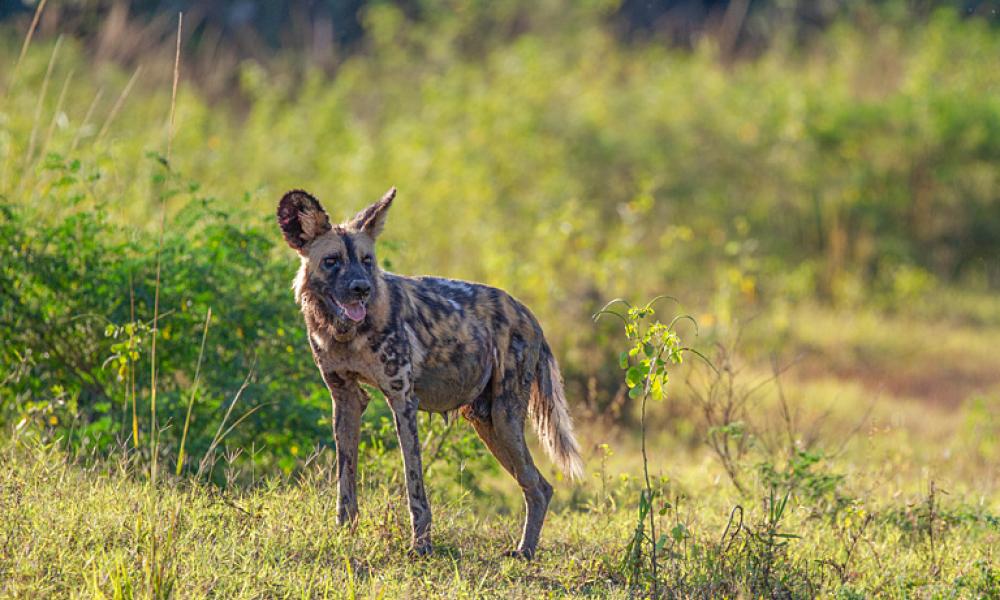
Still from David Attenborough's Kingdom
What would you say to someone thinking of applying to the NFTS Directing and Producing Science and Natural History course?
For me, it was a really formative experience which has equipped me with skills I still use every day in my job in the industry. I still feel so lucky I got to make two short films I’m really proud of, and collaborate with the other incredibly talented students at the school. If you have the opportunity to do it, and you’re passionate about stories and science and nature, it’s definitely worth your while.
Before making her mark in the blue chip space, Juliette made waves at the NFTS. Her first-year film Smart Slime? won the award for scientific merit at Scinema, the largest science film festival in the Southern Hemisphere, and was selected for the Vienna Science Film Festival 2020, alongside her graduation film Lifespan. LifeSpan was also selected for InScience Film Festival 2020 and was named finalist for the #LabMeCrazy! Science Film Festival 2021.
-
Our Directing and Producing Science and Natural History MFA provides you with the skills, knowledge and practical experience to hit the ground running and forge a successful career in the science and natural history industry. Our student work is constantly recognised at key awards and festivals including Student BAFTAs, Jackson Wild Media Awards, Student Academy Awards, Royal Television Society Awards, NaturVision and Wildscreen.
If you are keen to join our ever-growing list of successful graduates like Juliette working on top productions, applications are open to join the January 2027 cohort of our Directing and Producing Science and Natural History MFA.
Apply today: nfts.co.uk/snh